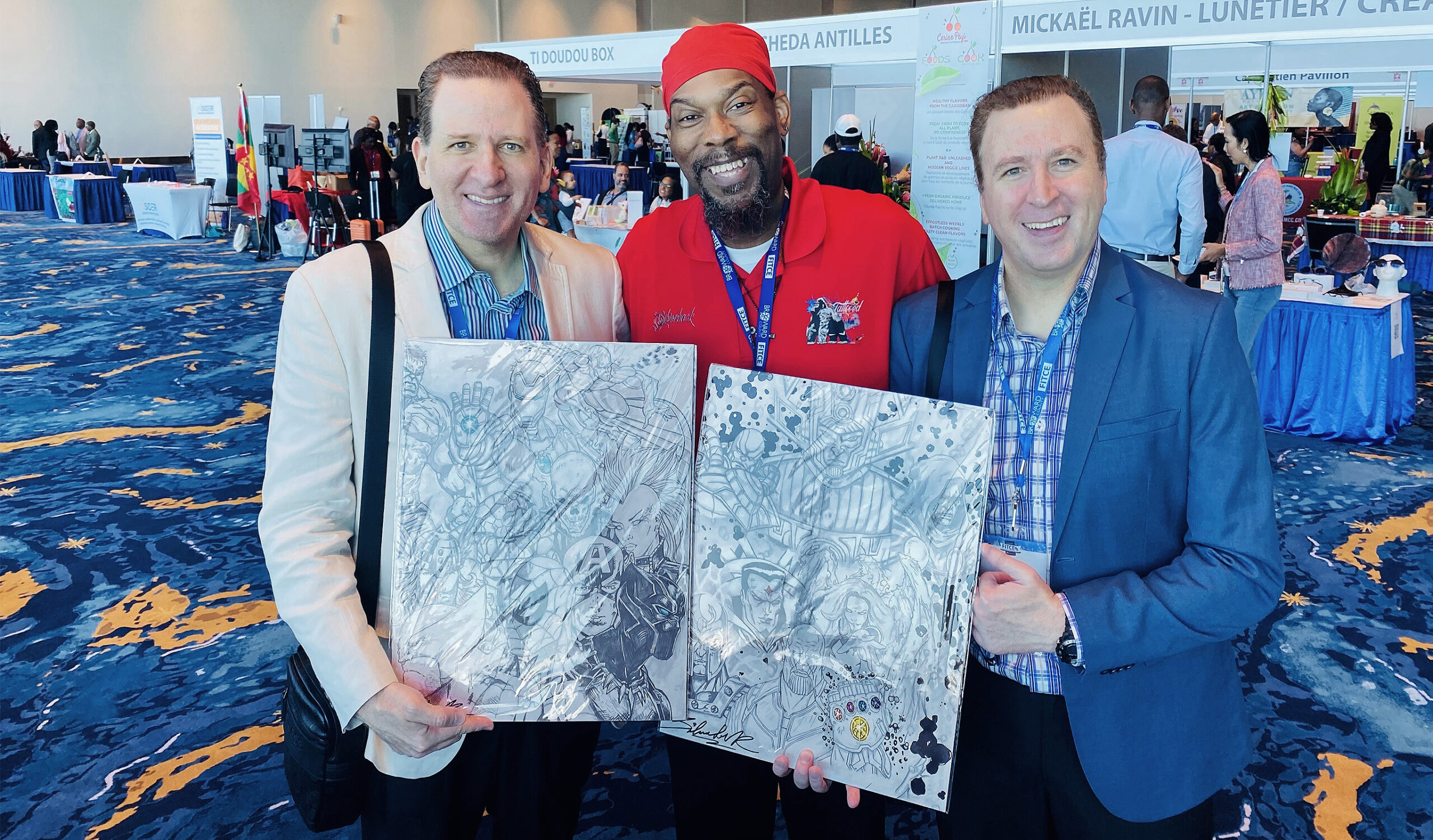
Growing up in New York, life wasn’t easy for a quiet, creative kid who felt out of place. “I was bullied as a child for being quiet and different,” the artist Silverback recalls. One afternoon, with tears in his eyes, he came home from school and turned on the TV, unknowingly setting his life on a new course.
“I saw the 1966 Batman on TV (it was the Louie the Lilac episode) and once I saw the POW! WHAM! BOFF! on the screen I was hooked.” From that moment, everything changed. He began drawing Batman, watching every episode faithfully, and eventually discovering Batman comics at his neighborhood toy store. “That was all it took,” he says. “From that moment I never looked back.”
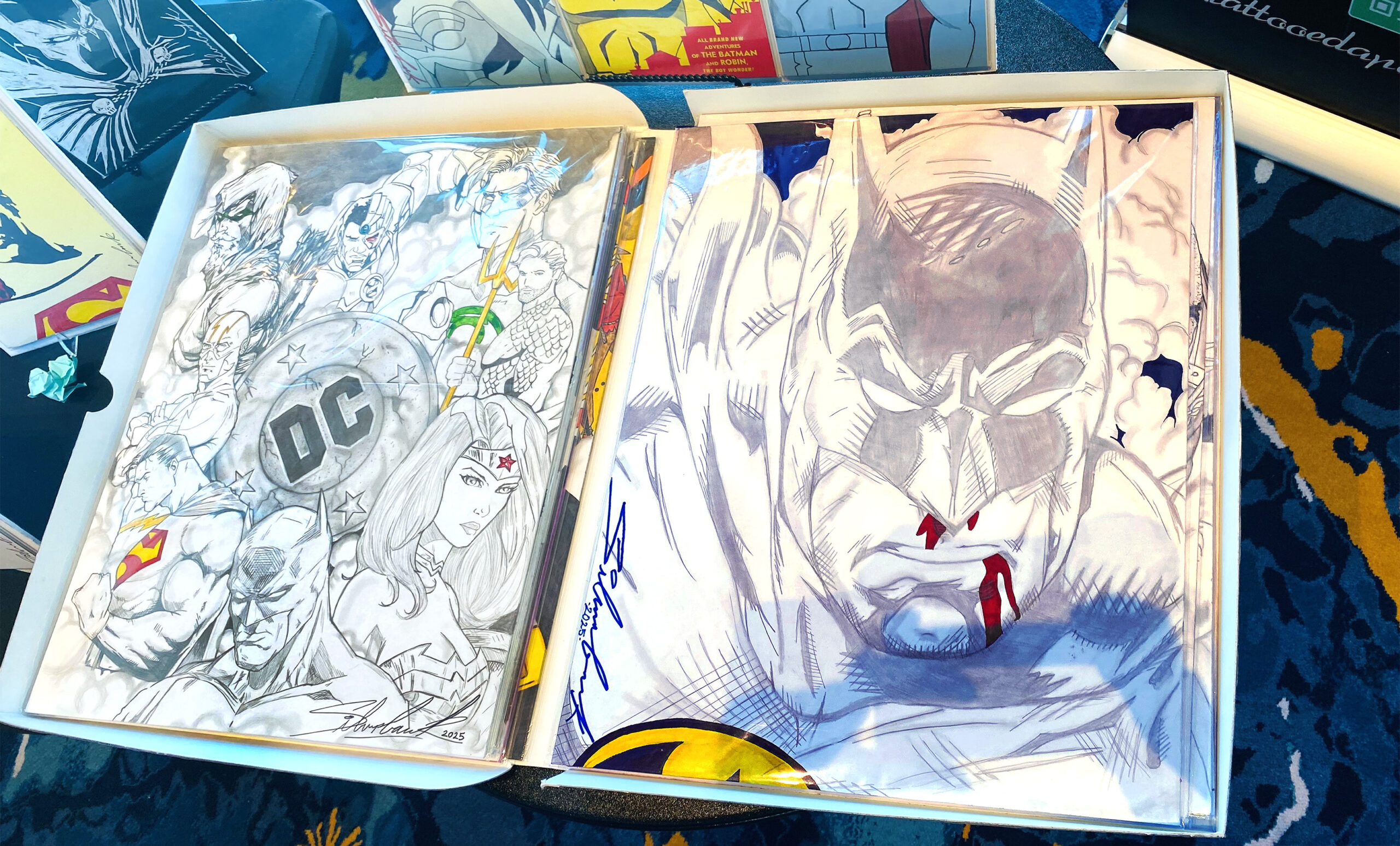
Every artist has mentors who help define their path, and for him, those mentors were legends. “Allen Bellman discovered me, Al Plastino and Nick Cardy mentored me and reviewed my portfolio,” he says with gratitude. But one name stands above the rest: Neal Adams. “Neal Adams definitely was instrumental in me wanting to pursue this career endeavor… to see Batman on paper with new adventures and even more exciting storylines every month with Neal’s work just solidified Batman as my number one favorite character of all time.”
His mentors’ lessons continue to guide him. “In my decade and a half career I’ve been blessed and privileged enough to not only meet all of them,” he reflects. “I didn’t just get to meet them but sit under their learning trees and partake in various conversations that helped solidify and define my career.”
When asked about the greatest comic he’s ever read, his answer is immediate: The Dark Knight Returns by Frank Miller. “It gave me a glimpse into what an older Batman would look like as the world advanced as he aged,” he says. “How sharp was his mind still? Was his resolve as steely as before?” And of course, he grins at the memory of that iconic showdown. He even quotes Batman’s unforgettable words to Superman: “I want you to remember that, I wanted to remind you to stay out of my way… in your most private moments, I want you to remember the one man who beat you.”
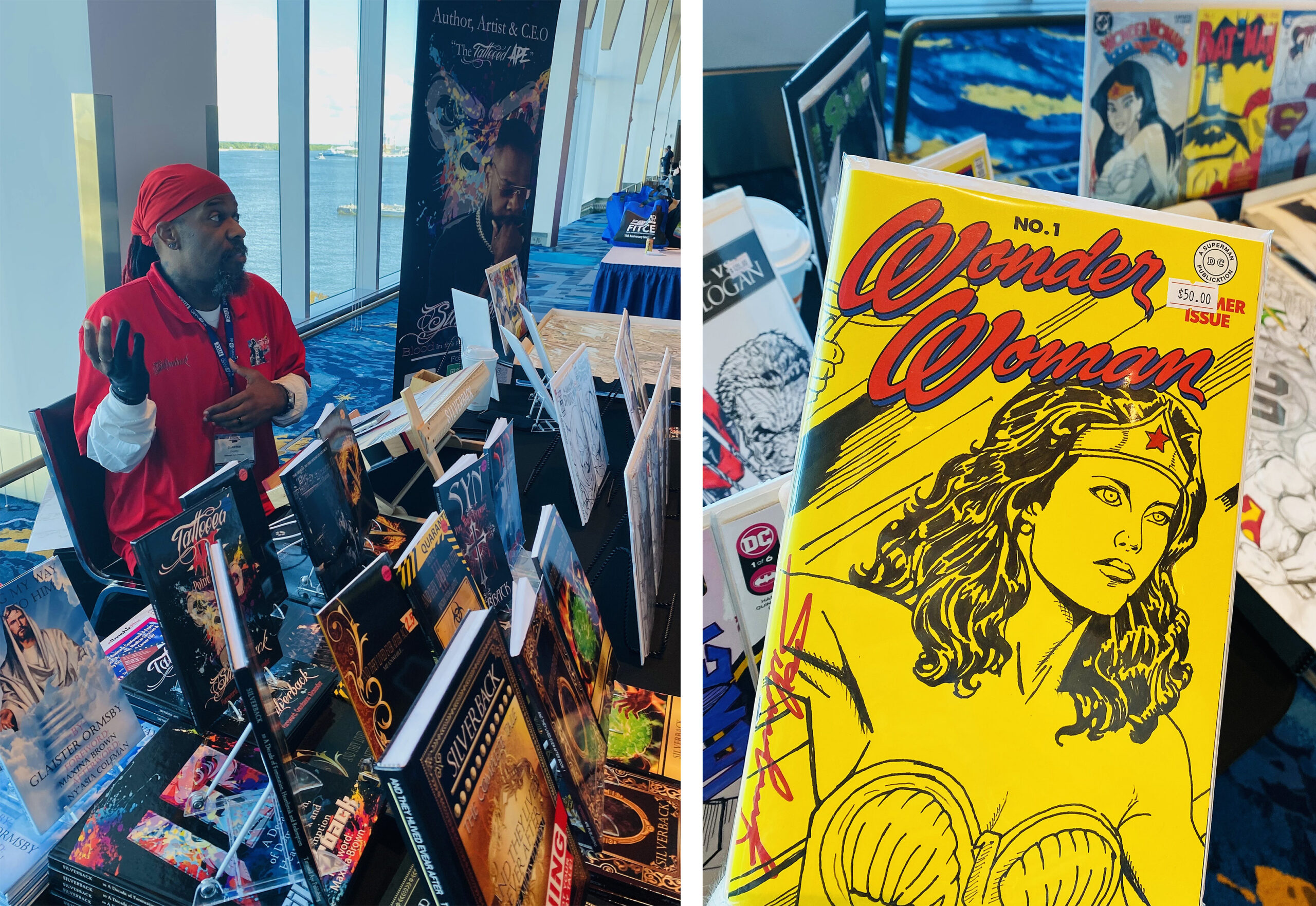
From the start, Silverback was a perfectionist, not satisfied until he understood every detail of the art he admired. “I would study comics from cover to cover,” he explains. “I would try my best to emulate everything from the shading to the intricate cross-hatching, to even the physical anatomy.”
Over time, those studies evolved into his own voice. “I drew a style that was interesting to me,” he says proudly. “It was a culmination of everybody’s work that I loved as a child.” “I always joke and say that I have the best profession in the entire world along with the world’s greatest textbook and instructors, a real MasterClass.”
In a digital age, his process remains refreshingly traditional. “When I create a piece I am very much old school with no modern technological software utilized,” he says.
His toolkit is classic: Bristol boards, Staedtler pencils, Micron pens, Sharpies, blending stumps, Tombow and Prismacolor markers, and a final coat of Krylon Fixative. It’s not about convenience, it’s about connection. Each tool is an extension of his hand, heart, and imagination.
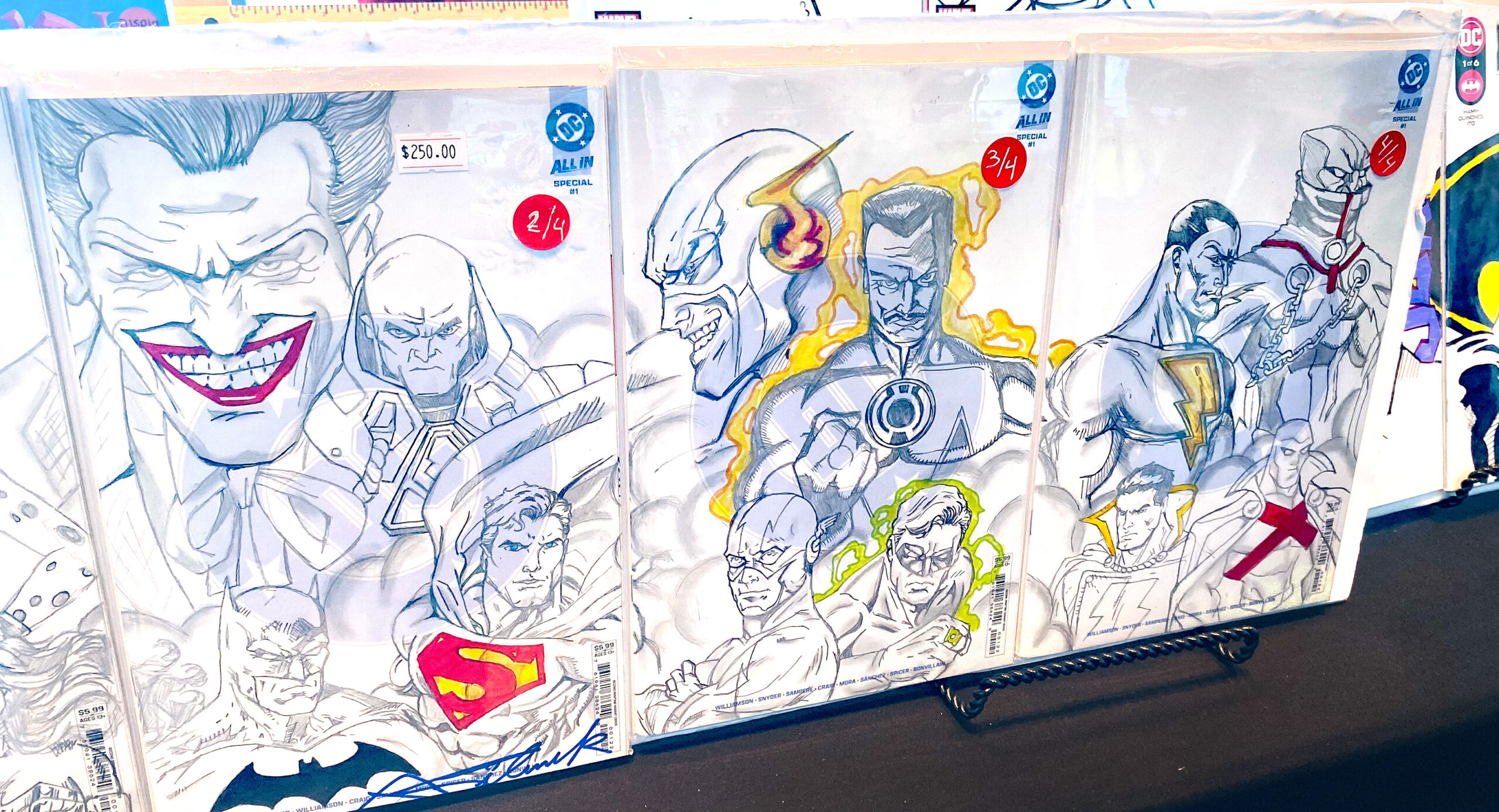
After years of hard work, several moments stand out as milestones in Silverback’s journey. One was the release and signing of Hell and Holy Water Issue #1. Another was receiving The Allen Bellman Award of Excellence from Sunrise Comic-Con, a recognition that carried deep personal meaning since Bellman had been one of his earliest mentors. But perhaps the most defining moment came when he made it to the main floor of Florida Supercon, sharing space with icons like Neal Adams, José Delbo, John Romita Jr., and Greg Capullo. “I started in Artist Alley all the way in the back by the loading docks,” he says, “and to stand shoulder to shoulder with legends, that was a full circle moment.”
For him, great comics are a perfect marriage of art and story. “A comic book has to be able to pull you in from the cover and keep that momentum through every page you turn and every bit of dialog you read,” he says. And the chemistry between hero and villain is essential. “The antagonist and protagonist have to bounce and work off each other, Batman and Joker, Superman and Luthor, Wolverine and Sabretooth.”
His advice to newcomers is simple yet profound: “Draw what you like; do not draw for the masses. If you try to draw for the masses, you will drive yourself absolutely crazy trying to please everybody.” He encourages artists to cultivate their own style and stay true to their passions. “Once you find your style, create what you love and it will attract the right fan base,” he says. “This business is a fickle business. Save yourself the pain, blues and agony and draw and write as if you were your own customer and your own fan base, and enjoy the journey.”
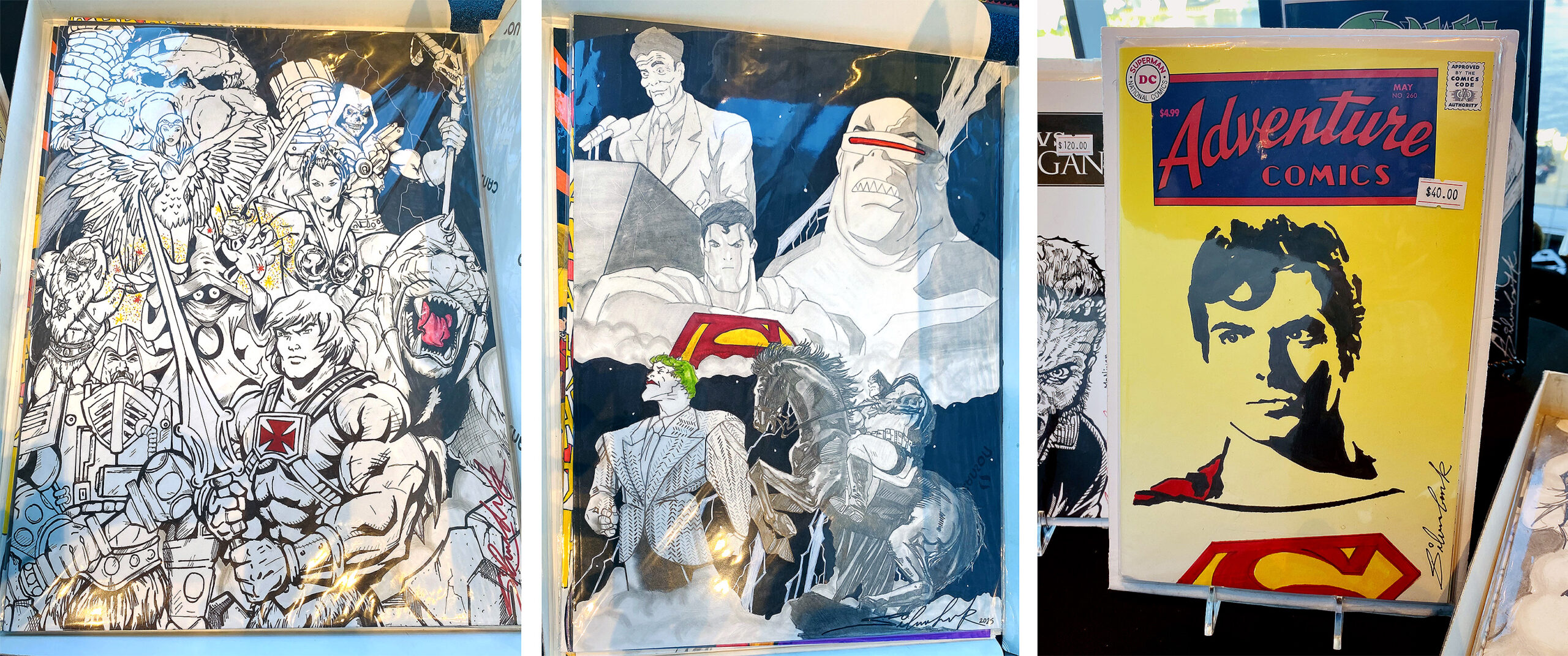
Silverback has mixed feelings about the digital future of comics. “I think the comic industry will thrive because of the digital platforms,” he admits. “It allows more people to embrace and experience the product.” But when it comes to AI, his tone shifts. “I believe that AI will take away from the creativity that comes from a human being’s head, eye, hand and more importantly heart,” he says. “When I look inside of a comic book, I can feel the energy and the passion that the artist puts on that paper. But when you can simply turn to AI and just tell it what you want, I feel like that’s cheating. I consider that 100 percent soulless.”
The future looks bright. With upcoming TV interviews and a packed 2025 schedule, he’s already gearing up for appearances at Sunrise Comic-Con and Free Comic Book Day 2026 at Past Present Future Comics in Davie. “The one thing that will remain constant from now going into 2026,” he says, “is there will definitely be a pencil in my hand and I’ll always be creating something new.”
From a bullied child in New York to sharing stages with his heroes, Silverback’s story is one of resilience, passion, and purpose. Every line he draws, every panel he inks, carries the spirit of that boy who once found hope in a “POW! WHAM! BOFF!” And perhaps that’s what makes his journey, and his art, truly heroic.